Pre-Delivery Inspection Checklist for New Warehouse Trucks

Verify the condition and functionality of new warehouse trucks before signing off on delivery to avoid post-purchase issues. Use this checklist to check chassis, hydraulics, electronics, safety gear, and paperwork, and document any faults before the vendor leaves the site.
- Inspect the chassis, tires, and mast before loading the truck.
- Test all controls, alarms, and warning lights while the truck is on the ground.
- Check the battery, charger, and wiring for signs of damage or loose connections.
- Review the serial number, warranty, and manual against the purchase order.
- Record all faults in writing and take photos before accepting delivery.
Why a Delivery Inspection Matters
A new warehouse truck should arrive ready for operation. If the chassis is dented, the tires are cracked, or the control panel shows a fault code, the problem is usually cheaper to fix at the dock than after the truck is in service. The buyer and the vendor may disagree about what counts as normal wear, so a written inspection record protects both parties.
This checklist covers the main areas to check during a delivery inspection of a new warehouse truck. It assumes the truck is off the transport trailer and on level ground. Work through each section in order. Do not sign the delivery receipt until the truck has passed every check or the faults are clearly noted.
Check the Chassis, Tires, and Mast
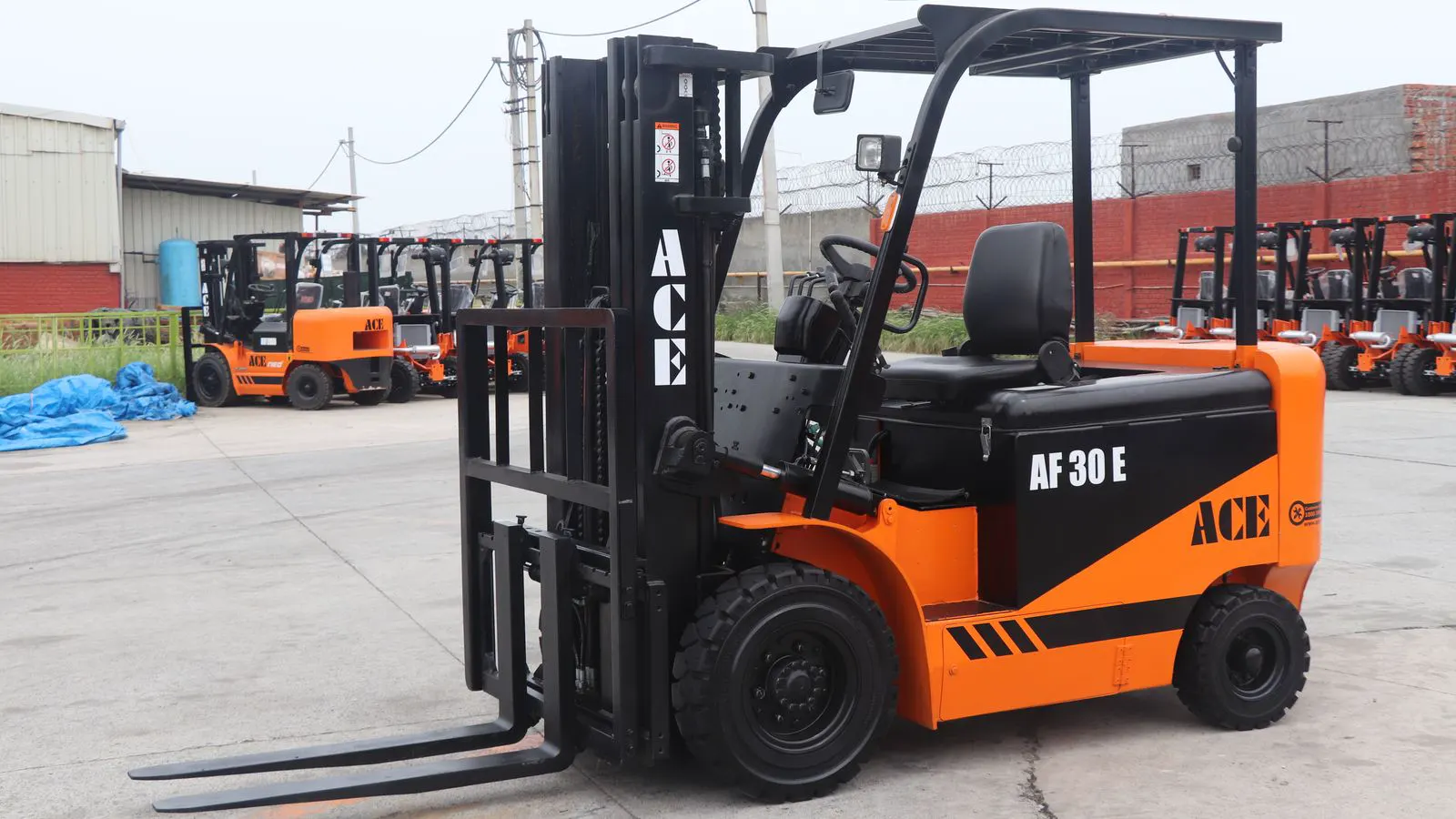
Start with the structure. Walk around the truck and look for dents, scratches, or paint chips on the overhead guard, mast housing, and counterweight. A dented overhead guard may indicate a collision during transit. Check the mast for bent rollers, missing wear strips, or hydraulic hose damage.
Inspect the tires. Electric warehouse trucks usually use solid rubber or pneumatic tires. Look for cuts, bulges, or uneven wear. Pneumatic tires should be inflated to the manufacturer’s specified pressure. If the tire sidewall is flattened or the tread is uneven, note it. A misaligned steering column can cause uneven tire wear, so check the wheels for visible damage too.
Look at the mast rollers and chains. The rollers should move smoothly up and down. Listen for grinding or sticking. Check the mast chains for proper tension and lubrication. If the chains are dry or damaged, the mast may fail under load. Check the hydraulic hoses for abrasion, swelling, or leaks. A small leak now can become a major repair later.
Test the Drive and Steering
Move the truck slowly in the yard or an open area. Start with the steering. Turn the wheel fully left and right. The truck should respond smoothly without binding or excessive play. Check for unusual noises from the steering rack or pitman arm.
Test the drive in forward and reverse. Start at low speed. The truck should accelerate smoothly and stop without pulling to one side. Listen for whining from the motor or transmission. Check the service brakes. They should hold the truck on a slight slope. Test the parking brake. It should engage firmly and hold the truck in place.
Check the horn. Press the button and listen for a clear tone. A weak horn is a safety issue. Test the turn signals if the truck is equipped with them. They should flash at a normal rate. Check the reverse alarm. It should sound when the truck moves backward. If the alarm is quiet or intermittent, note it.
Inspect the Hydraulics and Lift
Lift the forks to the highest position. The mast should rise smoothly without jerking or hesitation. Listen for whining or knocking from the hydraulic pump. Check the lift speed. It should be consistent throughout the range.
Lower the forks slowly. The forks should descend steadily. A sudden drop indicates a hydraulic leak or valve failure. Test the tilt function. Tilt the forks forward and back. They should move smoothly and hold position. Check for hydraulic fluid leaks at the hoses, cylinders, and pump. A small drip is acceptable during the initial test, but a continuous leak is not.
Load the forks with a weight if possible. Use a pallet of bricks or a standard test weight. Lift the load to mid-height. The mast should not lean or twist. Lower the load. Check the forks for damage or bending. The load back should be secure. If the forks are misaligned, note it.
Check the Battery, Charger, and Electrical System
For electric warehouse trucks, the battery is the heart of the system. Open the battery cover. Look for cracked cases, corroded terminals, or leaking electrolyte. Check the electrolyte level. The plates should be just covered. If the level is low, top it up with distilled water only. Never add acid.
Check the battery cables. They should be tight and free of fraying. Look for burnt marks or loose connections. A loose connection causes voltage drop and poor performance. Check the battery tray for cracks or damage.
Test the charger. Plug in the charger and observe the indicators. The charging light should turn on. Check the charging current if the charger has a display. It should be within the normal range for the battery size. Test the charge termination. The charger should stop when the battery is full. Check the charging cable for damage.
For internal combustion trucks, check the fuel tank. It should be full or have the agreed fuel level. Check the engine oil level. Look for leaks at the engine block, oil pan, and filters. Check the coolant level in the reservoir. Check the air filter. A dirty filter indicates the truck may not be new or was used before delivery.
Review Safety Equipment and Controls
Check the overhead guard. It should be securely attached. Look for cracks or bends. Check the seat. It should adjust smoothly and hold position. The seatbelt should be present and functional. Test the seatbelt buckle. It should click firmly.
Check the control levers. The lift, tilt, and steering levers should have clear travel limits. They should return to neutral when released. Check the accelerator and brake pedals. They should have firm feel and proper travel. The brake pedal should not go to the floor.
Test the emergency stop. It should cut power immediately. Check the warning lights. The overhead marker light should be visible from a distance. Check the backup light. It should be bright and functional. Check the seatbelt warning light if equipped. It should illuminate when the door is open or the seatbelt is not fastened.
Check the data plate. It should show the serial number, model, gross vehicle weight, and battery or fuel capacity. Verify that the serial number matches the purchase order and the warranty documents. A mismatch indicates a documentation error or a wrong truck.
Review Documentation and Warranty
Collect all paperwork before the vendor leaves. The delivery note should list the serial number, model, and accessories. The purchase order should match the items delivered. Check the warranty certificate. It should state the start date, coverage period, and exclusions. Read the exclusions carefully. Some warranties do not cover normal wear items like tires, batteries, or filters.
Check the operator manual. It should be in English or the local language. Verify that the manual matches the truck model. Check the spare parts list. It should include the correct fuses, bulbs, and small components. Check the service schedule. It should show the intervals for oil changes, filter replacements, and battery water checks.
Take photos of the documentation. Store them with the delivery note. If any item is missing, note it on the delivery receipt. Do not sign off on missing documents. The vendor should provide them within a short timeframe.
Record Faults and Sign Off
Write down every fault found. Be specific. Do not write “paint damaged.” Write “dented paint on left side of overhead guard, approximately ten centimeters long.” Take photos of each fault. Include a photo of the serial number plate for reference.
If a fault is minor, the vendor may agree to fix it on site. If the fault is major, the truck should not be accepted. Major faults include structural damage, hydraulic failures, electrical faults, or missing safety equipment. The delivery receipt should state “accepted with faults” or “rejected” depending on the outcome.
Sign the delivery receipt. Keep a copy. Send a copy to the vendor. Store the original with the warranty documents. If the truck is rejected, arrange return transport. If it is accepted with faults, schedule the repair. Do not put the truck into service until the faults are fixed.
Common Delivery Inspection Mistakes
Buyers often skip the inspection because they are in a hurry. The truck looks good from the outside. But a hidden fault can stop production for days. Do not rush the inspection.
Buyers often sign the receipt without checking the serial number. If the serial number does not match the purchase order, the warranty may not apply. Check the data plate against the paperwork.
Buyers often fail to test the truck under load. A mast may lift empty but fail with a heavy pallet. Test with a real load if possible.
Buyers often ignore small leaks. A small hydraulic leak can become a major failure. Note every leak.
Buyers often sign off without photos. Photos provide proof of the condition. Take them.
Final Checks Before Accepting Delivery
Before you sign, do a final walkaround. Check the tires again. Check the overhead guard. Check the mast. Check the battery. Check the controls. Check the safety lights. Make sure the truck is clean. Remove any transport straps or protective covers that are not needed for operation.
Make sure the truck is fueled or charged to the agreed level. If the truck is electric, make sure the battery is charged. If the truck is internal combustion, make sure the fuel tank is full.
Make sure the truck is ready for the first day of use. If the truck will be used immediately, make sure the operator has read the manual and knows how to use the controls. If the truck will be stored, make sure the battery is disconnected or charged, and the tires are protected.
The delivery inspection is a simple process. It takes an hour or two. It saves money and time. Do it every time.
Frequently asked questions
How long should a delivery inspection take?
A thorough inspection takes one to two hours. Allow extra time if the truck will be tested under load or if documentation needs to be reviewed in detail.
Can I accept a warehouse truck with minor paint damage?
Yes, if the damage does not affect structure or safety. Note the damage on the delivery receipt and take photos. Do not sign off if the damage is structural.
What if the serial number does not match the purchase order?
Do not sign the delivery receipt. Contact the vendor before accepting the truck. A mismatch can void the warranty or indicate the wrong truck was delivered.
Do I need to test the truck under load?
Yes, if possible. A mast may lift empty but fail under weight. Test with a standard pallet load to check for mast lean, hydraulic leaks, and fork alignment.
What documents should I keep after the delivery inspection?
Keep the delivery receipt, purchase order, warranty certificate, operator manual, and photos of any faults. Store them together for reference during the warranty period.